Open vs Enclosed Car Shipping: The Complete Comparison
Choosing between open and enclosed car shipping? Open transport is the most popular and affordable option — used for 90% of all vehicle shipments — costing between $0.50–$0.70 per mile. Enclosed car shipping offers premium protection inside a fully covered trailer, ideal for luxury, classic, and exotic vehicles, at $0.80–$1.20 per mile. Below, we break down every factor to help you make the right decision.
What Is Open Car Shipping?
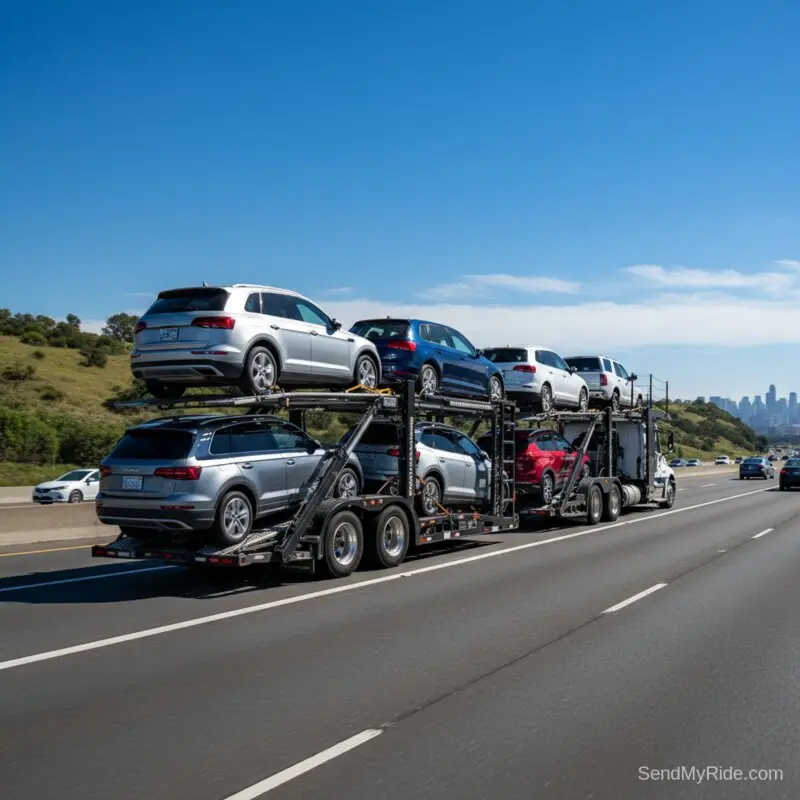
Open car shipping — also known as open car transport — is the standard method used to move vehicles across the country. Your car is loaded onto an open-air, multi-level carrier (the same type you see on highways every day) alongside 7 to 10 other vehicles.
How It Works
- Pickup: A driver arrives with a multi-car carrier and loads your vehicle using a hydraulic ramp.
- Transit: Your car travels on the upper or lower deck, secured with professional-grade wheel straps and tire nets.
- Delivery: The carrier delivers to your specified address or a nearby accessible location.
Key Characteristics of Open Transport
- Carriers hold 7–10 vehicles at a time, which distributes cost among multiple customers.
- Vehicles are exposed to weather, road debris, and dust — the same elements they'd face if you drove them yourself.
- Most widely available — more open carriers operate nationwide, meaning faster scheduling and shorter wait times.
- Used by dealerships and manufacturers — new cars shipped from factories to showrooms travel on open carriers.
The vast majority of cars on the road today have been on an open carrier at some point — likely when they were first delivered from the factory to the dealership.
What Is Enclosed Car Shipping?
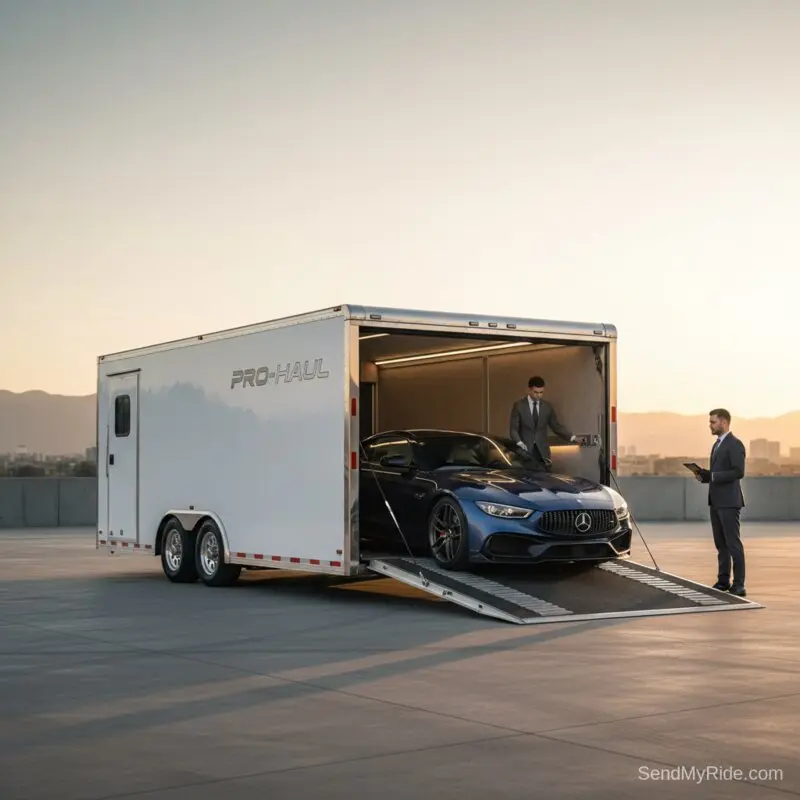
Enclosed car shipping uses a fully covered trailer — either hard-sided or soft-sided — to transport vehicles with maximum protection. These trailers shield your car from weather, road debris, UV exposure, and prying eyes during transit.
How It Works
- Pickup: A specialized enclosed trailer (carrying only 2–6 vehicles) arrives at your location.
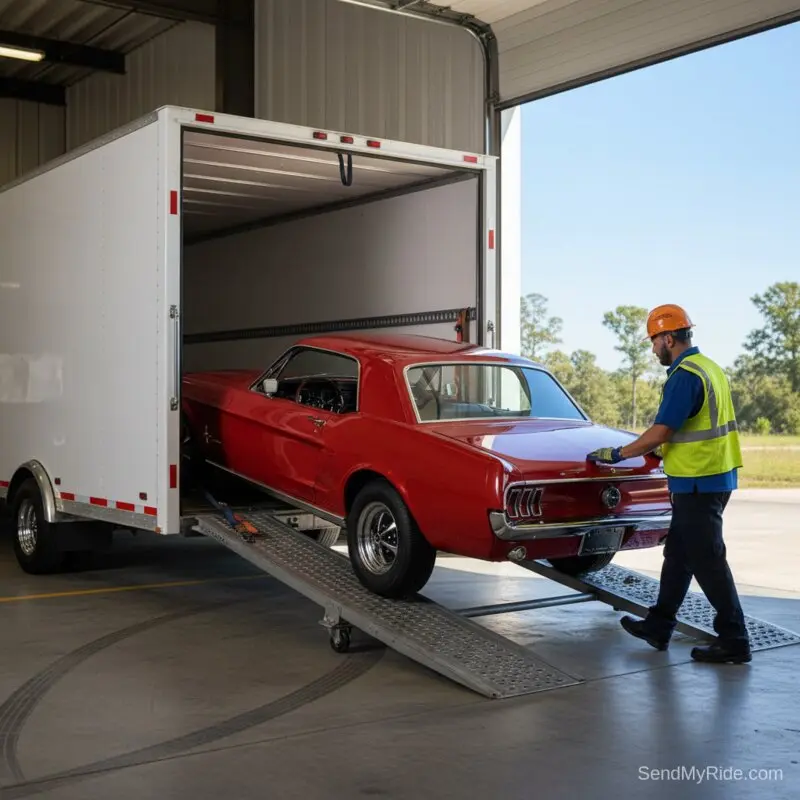
- Loading: Your vehicle is carefully loaded using a lift gate or low-angle ramp — minimizing any risk of undercarriage scraping.
- Transit: Inside the sealed trailer, your car is strapped down with soft-tie restraints and padded wheel nets designed for high-value vehicles.
- Delivery: White-glove delivery to your exact location, often with detailed vehicle inspection reports at both pickup and drop-off.
Key Characteristics of Enclosed Transport
- Trailers hold 2–6 vehicles, providing more space and individual attention per car.
- Full protection from rain, snow, hail, road salt, gravel, and UV damage.
- Higher insurance coverage — enclosed carriers typically carry $250,000–$1,000,000+ in cargo insurance vs. $100,000–$250,000 for open carriers.
- Preferred by collectors and dealers moving high-value inventory.
If your vehicle is worth more than $50,000 — or holds significant sentimental value — enclosed car transport is the smart choice.
Open vs Enclosed: Side-by-Side Comparison
| Feature | Open Car Shipping | Enclosed Car Shipping |
|---|---|---|
| Cost per mile | $0.50 – $0.70 | $0.80 – $1.20 |
| Price premium | Baseline | 40–60% more |
| Carrier capacity | 7–10 vehicles | 2–6 vehicles |
| Weather protection | None (exposed) | Full (sealed trailer) |
| Road debris protection | Minimal | Full |
| Insurance coverage | $100K–$250K | $250K–$1M+ |
| Availability | Very high | Limited |
| Average wait time | 2–7 days | 5–14 days |
| Market share | ~90% of shipments | ~10% of shipments |
| Best for | Daily drivers, used cars | Luxury, classic, exotic cars |
When to Choose Open Transport
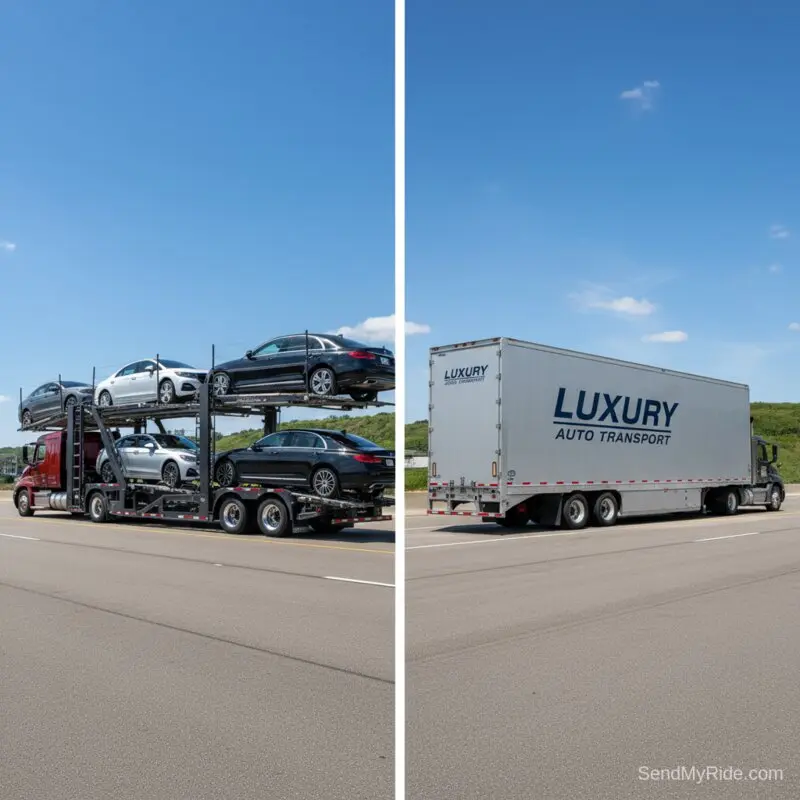
Open car transport is the right choice for the majority of vehicle shipments. Consider open shipping when:
Your Vehicle Is a Daily Driver
If you drive a Honda Civic, Toyota Camry, Ford F-150, or any standard production vehicle — open transport offers excellent value. These cars are built to handle everyday road conditions, and an open carrier exposes them to nothing more than a normal highway drive.
You're Buying or Selling a Used Car
Purchased a car on a marketplace or through a dealership in another state? Open transport is the industry standard for used vehicle delivery — reliable, affordable, and widely available.
Budget Is a Priority
For a typical 1,000-mile shipment, open transport saves you $300–$500 compared to enclosed. On a coast-to-coast move (2,500+ miles), savings can exceed $1,000.
You Need Fast Scheduling
Because open carriers make up the vast majority of the fleet, dispatch times are significantly shorter. If time is a factor, open transport usually offers pickups within 2–7 days versus 5–14 days for enclosed.
You're Moving for Work or Relocation
Corporate relocations, military PCS moves, and snowbird seasonal migrations — these high-volume use cases overwhelmingly favor open transport for its balance of cost, speed, and reliability.
When to Choose Enclosed Transport
Enclosed car shipping is the premium option — and for certain vehicles, it's absolutely worth the investment. Choose enclosed when:
Your Vehicle Is Worth $50,000+
Luxury vehicles like Mercedes S-Class, BMW 7 Series, Porsche 911, Tesla Model S Plaid — any car with a high market value deserves the extra layer of protection. Even a minor cosmetic blemish from road debris can cost thousands to repair on a premium finish.
You Own a Classic or Vintage Car
Classic cars — whether a 1967 Mustang, a restored Corvette Stingray, or a numbers-matching Camaro — are irreplaceable. Enclosed transport protects original paint, chrome trim, and fragile components from the elements.
You're Shipping an Exotic or Supercar
Ferraris, Lamborghinis, McLarens, and limited-production vehicles demand enclosed transport. Beyond physical protection, enclosed trailers prevent unwanted attention and photos of your vehicle in transit.
The Car Is Brand New (Dealer or Private Purchase)
Buying a factory-fresh vehicle and want it to arrive in showroom condition? Enclosed shipping ensures zero miles driven and zero exposure to highway conditions.
You're Shipping to or from a Car Show or Auction
Auction houses like Barrett-Jackson, Bring a Trailer, and Mecum regularly ship consigned vehicles via enclosed carriers. Presentation matters — and arriving without road grime or a fresh rock chip protects your investment and resale value.
Your Vehicle Is Inoperable or Non-Running
Many enclosed carriers are better equipped with lift gates and winch systems to safely load non-running vehicles without risking damage.
Cost Comparison: Open vs Enclosed Car Shipping
Understanding the real cost difference helps you make an informed decision. Here's what to expect in 2025:
Typical Pricing by Distance
| Distance | Open Transport | Enclosed Transport | Difference |
|---|---|---|---|
| 500 miles | $250 – $350 | $400 – $600 | +$150–$250 |
| 1,000 miles | $500 – $700 | $800 – $1,200 | +$300–$500 |
| 1,500 miles | $750 – $1,050 | $1,200 – $1,800 | +$450–$750 |
| 2,500 miles | $1,250 – $1,750 | $2,000 – $3,000 | +$750–$1,250 |
What Drives the Price Difference?
- Carrier capacity: An open carrier splits fuel, tolls, and labor costs among 7–10 vehicles. An enclosed carrier splits among only 2–6 — so each customer absorbs a larger share.
- Equipment costs: Enclosed trailers are more expensive to purchase, maintain, and insure.
- Insurance premiums: Higher cargo values mean higher insurance costs for the carrier — passed on to the customer.
- Supply and demand: Fewer enclosed carriers operate nationwide, which means less competition and higher rates.
Is Enclosed Worth the Extra Cost?
Ask yourself: Would a $2,000 paint repair or a diminished-value claim on your vehicle exceed the $300–$1,000 premium for enclosed shipping? For vehicles worth $50,000 and up, the math almost always favors enclosed transport.
How SendMyRide Handles Both Options
At SendMyRide, we specialize in matching your vehicle with the right transport method — whether that's a cost-effective open carrier or a premium enclosed trailer.
What Sets Us Apart
- Vetted carrier network: Every carrier in our network is FMCSA-licensed, fully insured, and background-checked.
- Transparent pricing: We provide upfront quotes with no hidden fees — get your free quote in under 60 seconds.
- Both options available: Whether you need open car transport for a family sedan or enclosed car shipping for a six-figure collectible, we have capacity nationwide.
- Real-time tracking: Monitor your shipment status from pickup to delivery.
- Dedicated support: A real person manages your shipment from start to finish — not a chatbot.
Our Recommendation Process
When you request a quote from SendMyRide, we ask about your vehicle's year, make, model, condition, and value. Based on that information, we recommend the transport type that makes the most sense for your situation — and we never pressure you into a more expensive option you don't need.
Need help deciding? Contact SendMyRide today — we'll give you an honest recommendation and a competitive quote for both open and enclosed car shipping.
Frequently Asked Questions
Is open car shipping safe?
Yes. Open transport is the same method used by auto manufacturers to deliver brand-new cars to dealerships across the country. Professional carriers use industry-standard tie-downs and loading procedures. The risk of damage is extremely low — less than 1% of vehicles experience any issues during open transport.
Will my car get dirty on an open carrier?
It's possible. Your vehicle may accumulate road dust, bug splatter, or minor grime during transit — similar to what it would experience on a long highway drive. A simple car wash after delivery is usually all that's needed.
How much more does enclosed shipping cost?
Enclosed car shipping typically costs 40–60% more than open transport. For a 1,000-mile shipment, expect to pay an additional $300–$500 for enclosed service.
Can I ship a non-running car in an enclosed trailer?
Yes. Many enclosed carriers are equipped with hydraulic lift gates and winch systems specifically designed to load non-running or inoperable vehicles safely.
How far in advance should I book enclosed transport?
We recommend booking enclosed car transport 2–3 weeks in advance when possible. Enclosed carriers have limited capacity (2–6 vehicles per load), so availability can be tighter — especially during peak seasons like January–March (snowbird season) and summer.
Does SendMyRide offer insurance for both options?
Every shipment through SendMyRide includes carrier liability coverage. Enclosed shipments typically carry higher coverage limits. We can also help you arrange supplemental insurance for high-value vehicles.
What's the difference between hard-side and soft-side enclosed trailers?
Hard-side enclosed trailers have rigid metal walls — offering maximum protection against weather and debris. Soft-side trailers use heavy-duty vinyl or canvas covers — still significantly better than open transport, but with slightly less impact protection. Both qualify as enclosed car shipping.
Can I choose between open and enclosed after getting a quote?
Absolutely. When you get a quote from SendMyRide, we provide pricing for both options so you can compare and decide with full transparency.
Ready to ship your vehicle? Get a free quote from SendMyRide — we'll help you choose the right transport method for your car, your budget, and your peace of mind.